I love a good “best of” list. If it’s on something I know nothing about, it’ll give me a good place to start. If it’s on something I know a shitload about, it’ll give me a good reason to argue. And if it’s on something I know a shitload about, but still has some stuff on it that I don’t know about, it’ll give me some cool shit to check out.
There’s nothing better than a list of eight albums you love and two you’ve never heard before, because there’s a good chance you’ll soon have two new albums to love.
In an era of metrics-driven content, I appreciate how a curated list by critics or fans (or an editorial team of critics or fans) can give listeners a more unique (and often more challenging) experience than just sucking content straight from the algorithm hose.
Today we’re talking about Treble’s list of their 50 favorite post-punk albums of the 21st century.
I think of post-punk music like pizza. When it’s good, it’s great, and when it’s bad, it’s still pretty good. I appreciate that even though the music can be artsy-fartsy and pretentious, since it’s directly influenced by blue collar punk rock, it can never get too ponderous.
And since post-punk never had much commercial popularity to begin with, its practitioners never get too thirsty about “getting famous” or “making a living.” If a band’s making post-punk music, typically they’re only in it for the post-punk music. That’s just about as close as you’re going to get to art for art’s sake in the communal world of garage rock.
Liars’ They Threw Us All in a Trench and Stuck a Monument on Top (2001): We’ve talked about later iterations of the Lairs here, about how they became critical indie rock darlings in the mid-2000s, but their debut album here sounds barely anything like that more mature work.
Around the turn of the millennium, the NYC music press tried to sell us on “electro-clash,” a supposedly original genre that fused punk and dance music, ignoring the fact that New York bands literally pioneered this shit back in the late ‘70s with no wave.
They Threw Us in a Trench… could be a cult object from 1979, slotting perfectly between the Contortions’ Buy and the No New York compilation, for people who like some squalling noise with their funk. If anything, this album’s underrated because of what came after it (which is also underrated, c’est la vie).
Life Without Buildings’ Any Other City (2001): We’ve also talked about these artists-turned-musicians-turned-artists before, and, with them in the news for releasing a new (old) song, I hope they’re getting new ears on their joyous, churning, sprechgesang post-punk.
Since the band only released one studio album (and have not reunited), I feel that Life Without Buildings may have the most perfect post-punk career. They released a single and singular album, and then dropped the mic forever, leaving their album to grow in stature as the years pass, and as it influences the new generations of musicians. That’s some Van Gogh shit, there.
Interpol’s Turn on the Bright Lights (2002): And now for the most overrated album on this list….
People love – or at least say they love – this album. On Rate Your Music, it scores the number eight spot, five spots above Gang of Four’s Entertainment, six above Siouxsie and The Banshees’ Juju, and 18 (!) above Wire’s Chairs Missing. What the fuck are we doing here?
Don’t get me wrong, Interpol have a distinct sound, but it’s Joy Division’s, from the dour baritone vocals, to the chiming guitars, to the high basslines, to the pools of synthesizer, to the immaculate, gleaming production.
Look, I love Joy Division, too. But there’s only room in my heart for one band that sounds this…uh…un-fun. Perfect production doesn’t necessarily make for perfect listening.
Wire’s Read & Burn 01/02 (2002): With their Burn & Read EPs, post-punk royalty Wire returned after twenty years of (increasingly less rewarding) experimentation to the post-punk sound that made them famous in the first place.
Actually, not quite. Although Wire strum in the same way they did on their debut, Pink Flag, the guitars sound much fatter and compressed, and the drums sound more robotic (this was, after all, a band whose drummer fired himself after the band bought a drum machine), as if they finally learned how to pace themselves.
Good for them, it revitalized their still-ongoing career.
They’ve now released as many albums after Read & Burn as they released before it.
The Fall’s The Real New Fall LP: Formerly ‘Country on the Click’ (2003): I saw the Fall – Mark E. Smith’s band/cult, which saw 66 unique players pass through its ranks over its forty year career – play in Boulder, CO, only a couple weeks after Smith’s entire band quit four shows into their 2006 US tour. Smith, who declared to NME that if music can’t be played by a garage band “fuck it,” promoted his opener to fulltime Fall members and played the rest of the shows. He gave a professional, if uninspired, performance, before, presumably, returning to the back of the tour bus and finding the bottom of a bottle of scotch. Considering they had to learn the shit on the fly, I think his new Fall did a wonderful job.
Treble could’ve picked Fall Heads Roll or The Unutterable instead of Real New Fall, all of which are good-to-great Fall albums from the latter half of their career. Real New Fall sees Smith play nice with synthesizers, rock out on “Theme From Sparta F.C.” and prove, once again, that you don’t need a pleasant (or comprehensible) voice to make compelling music.
Killing Joke’s Killing Joke (2003): Killing Joke’s second self-titled album (and eleventh) overall features Dave Grohl on the drums, founding member Youth on bass, Gang of Four guitarist Andy Gill behind the boards, and a little clown/skull guy on the cover that would make for a cool bumper sticker. I imagine the band, who’ve gone on to record four more studio albums, saw it as a revitalization, and a good way to introduce them to a new generation.
I like, respect, and always find a spot for Killing Joke on compilations, but they’re not part of my regular rotation. If I want their particular sound, I’ll go back to their first self-titled album.
Franz Ferdinand’s Franz Ferdinand (2004): How did Franz Ferdinand not become the next Pulp? They had chops, hooks, and a flamboyant, pansexual, lounge lizard singer in Alex Kapranos. But instead of creating a durable discography, they made one instant classic album, one quickly recorded follow-up that was its lesser in every way (though still pretty good), and a series of stumbles and return-to-forms that I don’t believe anyone has listened to since they came out. Maybe they were a post-punk band after all.
Bloc Party’s Silent Alarm (2005): This is how I want my Joy Division knock-offs to sound. Although Bloc Party’s Kele Okereke’s a little more shrill than Interpol’s Paul Banks, the band surrounding him feel like they have blood running through their veins instead of coolant.
Check out “Helicopter” to see what a band can do with two guitarists. Where punk bands with two six-string slingers typically have a chord guy and a lead guy, Bloc Party have two lead guys, and yet they still leave plenty of space for the bass. Nice discipline, boys. Oh, and a little synth, too. Tasty.
How do you know Bloc Party is a post-punk band? Their first album has a gajillion plays on Spotify and the rest of them have like 13.
Wilderness – Wilderness (2005): Here’s a first on this list: an album I don’t know, by a band I’ve never heard of.
On their self-titled debut, these Bawlmer boys create indie rock by way of Public Image, Ltd. They’re not as abrasive as Johnny Rotten’s second band, but they create a similar churning open-ended soundscapes.
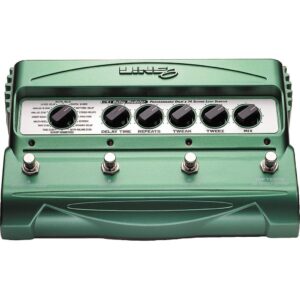
Released in 2005, Wilderness were early on delay, which became the effect du jour for indie rock in the late 2000s. I blame the Line 6 DL-4.
I like everything here except the piano thing at the end.
Mission of Burma – The Obliterati (2006): You know them. You love them. (At least you better fucking love them!)