We’re continuing our jaunt through Treble’s list of their Favorite Post Punk Albums.
Cold Cave – Cherish the Light Years (2011): If you make enough post-punk playlists, you begin to experiment with how far you can push the genre. After all, technically all music that comes after punk is “post-punk.”
But when it’s laid out in a linear format, even a genre as nebulous as “post-punk” comes into focus. A playlist really lets you hear who fits in and who doesn’t.
The Human League? Yes. The Culture Club. No. Early Scritti Politti? Yes. After they discovered Michael Jackson? No. Early U2? Maybe. Glenn Branca? No. This Heat? Yes, but you can’t pick one of the songs that sounds like a refrigerator running for six minutes. A Flock of Seagulls? Get the fo’ outta here.
With its crystalline synths, splashy hi-hat, and traditional song structures, Cold Cave’s Cherish the Light Years falls more on the new wave/pop end of the post-punk spectrum than any album that appeared earlier on this list.
But its web of synthesizers and Wesley Eisold’s art-damaged, Bryan Ferry-esque yawp guarantee that Cold Cave are pitching their music to post-punk listeners rather than the general public.
If you put Cold Cave on a post-punk playlist, its poppy sound might turn off the diehards noiseniks, but if you put them on a new wave playlist, they’ll definitely spook the normies.
Beastmilk – Climax (2013): C’mon: “Climax” by “Beastmilk?” It might as well be “Cum” by “Jizz.” Who says post-punk takes itself too seriously?
If there was a mainstream sound to post-punk, Beastmilk’s driving, muscular take on the sounds of ‘79 would be it. With crisp production from hardcore-lifer Kurt Ballou and gothic vocals from Kvohst, Treble compares the Finnish band to the Cult. As someone who enjoys the theatricality, but not the plodding tempo of goth rock, I’ll take Beastmilk’s hard rock post-punk any day of the week.
Savages – Silence Yourself (2013): Silence Yourself was an important inspiration for Heck Reckoners: theatrical female singer, dominant bass, one noisy guitar, maybe some lyrics about aberrant sex…. Who wouldn’t love that?
Alas, Savages turned out to have the archetypal post-punk career. The band made two acclaimed albums (this and 2016’s Adore Life), gained a reputation for their, ahem, savage live show, and then split before recording a second of bad music.
I don’t know about you, but I would rather a band exist for a good time instead of a long time.
Tropic of Cancer – Sleepless Idylls (2013): Tropic of Cancer’s barely there Sleepless Idylls have more in common with OMD and Eno’s ambient albums than the traditional post-punk mainstays.
I think it’s important to remember that krautrock was as influential on post-punk as Iggy Pop and the New York Dolls. Hell, you could be reductive and say that much of the genre’s innovation involves distilling long krautrock songs into short post-punk songs.
On Sleepless Idylls, Tropic of Cancer channel mid-1970s Tangerine Dream, boiling down their synth-pop masterpieces like Phaedra and Rubycon, and then adding drum machines and blissed out vocals, to create velvety soundscapes that sound more like the imperial era of the Cure than anything written during the first blast of post-punk.
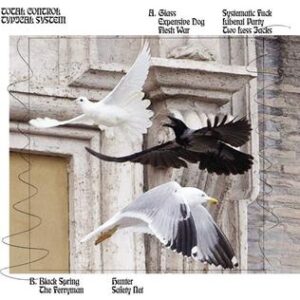
Total Control – Typical System (2014): Total Control makes albums like a post-punk pu pu platter. Here’s a punk song. Here’s the poppy synth one. Here’s an industrial one that sounds like two air purifiers trying to outdo each other.
Where punk bands typically value their live show over their studio albums, post-punk bands usually treat their live show as a sampler of the wacky shit they come up with on record. Typical System’s winningly ramshackle variety leads me to believe the band wrote the album in the studio with no concern for how they could make it work on stage.
With their janky synths, reedy guitars, and first-gen drum machines, Total Control feel like they have as much in common with contemporaneous garage rockers like Ty Segal, Thee Oh Sees, and fellow countrymen King Gizzard and the Wizard Lizard as they do with, say, Beastmilk, but their relentless creativity makes them a protegee of Wire rather than Nuggets, which puts them firmly in the post-punk camp.
The Twilight Sad – Nobody Wants to Be Here and Nobody Wants to Leave (2014): The Scots learned something different from punk than the rest of us.
Most post-punk bands co-opted the sound as well as the attitude of bands like the Sex Pistols, but Scots like Orange Juice, Josef K, and their late-to-the-party second cousin the Twilight Sad only borrowed the attitude. The noise wasn’t for them. Too loud. Too abrasive. Too much guitar.
The Scots favored quieter, more austere music, lyrics that were more literate than sloganeering, and a depth of emotion that their arthouse brethren would’ve found cringey. Eventually, the Scottish school would co-mingle their sound with driving bass and atmospherics of Bauhaus and the Cure and invent goth rock.
But The Twilight Sad aren’t exactly that. In fact, I think they have as much in common with the intimate indie rock of Belle and Sebastian as the Cure. Or maybe I’m just racist in thinking that all Scots sound alike.
Algiers – Algiers (2015): Speaking of racist… (what an awful transition)… there aren’t enough people of color making post-punk music. For a genre that was initially so welcome to incorporate black music – funk and reggae are as essential to post-punk as the Ramones and the Clash – it sure hasn’t tried very hard to integrate anything else in the meantime.
Curiously, post-punk and hip-hop formed at the exact same time. One went one way, the other went the other, and the twain shall, apparently, never meet.
Actually, let’s never say never, but let’s acknowledge that it’s always the hip-hop community reaching for Joy Division records (e.g. Danny Brown’s Atrocity Exhibition) rather than post-punkers jamming on Li’l Wayne.
On their self-titled debut, Algiers, fronted by Franklin James Fisher, don’t merge post-punk with modern black music, but they go further back, unearthing gospel, R&B, and, soul and melding them within a post-punk and industrial framework. As Treble says, Algiers takes “a truly unexpected combination of ingredients [and] creates a coherent and fascinating whole.”
The only reason we don’t yet have a post-punk hip-hop masterpiece is because no one has pulled it off. I’m not saying it can’t be done. I’m saying it hasn’t been done…yet.
If Algiers can integrate spirituals and drum machines, someone can figure out rap and chorus pedals.