My dad and I have listened to the Grateful Dead together more than any other band. I remember when Jerry Garcia died during my childhood, my dad was so disappointed we would never share the experience of seeing the play together live.
Fortunately, we got the next best thing, as the Dead continued touring composed of its living members and a rotating cast of front men. At a Red Rocks show in my teens, concertgoers handed me and my sister a joint as a Warren Haynes-fronted Dead sloppily made its way through the band’s classics.
More recently, my parents and I caught John Mayer front a newly muscular (but still autumnal; the band always had one foot in the grave) Dead and Company at Folsom Field.
Mayer has one of the oddest second acts in music history. The pretty bluesboy released one of the grossest pop songs of all time (“Your Body is a Wonderland”), became embraced as one of the best guitarists of his generation, and spent the last decade as the replacement for one of rock’s most irreplaceable bandleaders. He even won over their most diehard fans in the process. I can attest: Dad fires up YouTubes of Mayer’s Dead as often as Jerry’s.
Yet Mayer drew his authority over the good ship Grateful from the Dead’s first mate, founding member, lead singer, and rhythm guitarist Bob Weir, who died this Saturday at 78.
Although Weir headlined his own bands, Kingfish and RatDog, among others, his largest contribution to music comes from his work with the Grateful Dead and its later iterations, with whom he played for sixty years.
In the early, acid-fried Haight/Ashbury days, Weir, the baby in a band of theory geeks and tech nerds, was the eye candy.
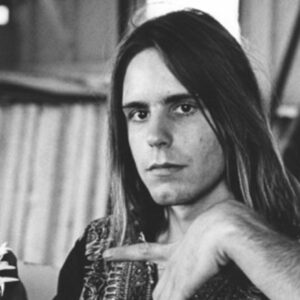
After the suggestion to shape up or ship out, Weir knuckled down and became one of the most sympathetic rhythm guitarists in rock, drawing as much from jazz pianist McCoy Tyner as Chuck Berry. His choppy suspensions and inversions provided the perfect petri dish for Garcia’s idiosyncratic leads and Phil Lesh’s demonstrative bass. Together they pioneered the psychedelic stew of improvisation, rock & roll, country, blues, and avant-garde that all jam bands aspire towards today.
The yang to Garcia’s yin, Weir sang lead on the band’s rocking tunes, its story songs, its country covers. While Garcia chased comets and chilled on sunbeams, Weir kept the Dead rooted in the salt of the earth, his masculine baritone giving life to the hard-bitten characters of “Truckin’”, “Me and my Uncle”, “Jack Straw” and characters in covers from Merle Haggard and Bob Dylan. Garcia played the space cowboy, so Weir had to play the cowboy cowboy.
But Weir could also be soft, celebrating a ride-or-die on “Sugar Magnolia”, paying homage to fellow traveler and Beat mystic Neal Cassady on the melodic “Cassidy”, and lamenting the departure of a lover he just wants to settle down with on “Looks Like Rain.”
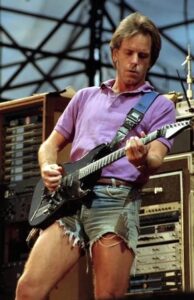
In the 1980s and ‘90s, as the Dead became an industry unto itself, Weir helped popularize Polo shirts as the uniform of fellow Bay Area startups, while rocking shorts tiny enough to make John Stockton blush.
And after a half-century of playing the field with probably the most wildly, uh, aromatic spectrum of women in the 20th century, Weir settled down at 50 with Natascha Münter and had two kids.
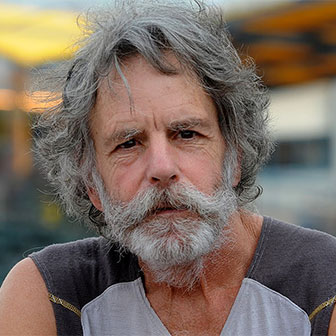
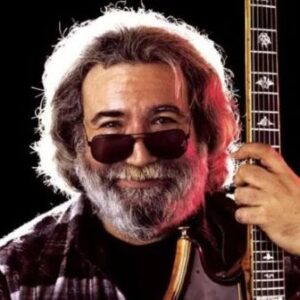
By the end of his life, Weir’s tranquil, impressively mustachioed mien had become as iconic as his once-guitar teacher and eternal best friend Garcia’s had become a generation earlier. Fare thee well, cowboy.
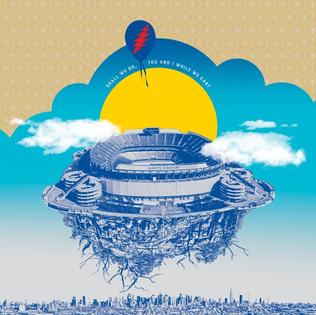
This week’s Heck Record, Dick’s Picks Volume 4, comes second in Deadhead renown only to the flawless 5/8/77 Cornell show. But, while that show portrays a band at the height of their powers and on their best behavior, I’ll take the explosions and occasional slop of this February 1970 showcase from NYC’s Fillmore East.
Months later, the band would take another of its many left turns, transitioning into a roots rock band par excellence with the release of the largely acoustic Workingman’s Dead, but this show captures the band at the absolute peak of their fire-breathing LSD fury.
With “Casey Jones”, “Dire Wolf”, and “Me and my Uncle”, Volume 4’s setlist gives us a taste of what’s to come, but the meat of the record plays to the ‘heads in the audience.
Garcia and Weir’s guitars interlock on the Alice in Wonderland-inspired “China Cat Sunflower,” proving that they could both play lead and rhythm at the same time. On “Not Fade Away,” they sing in unison, Garcia’s gentle voice mellowing Weir’s rock & roll bark.
Bob and Jerry clear out to allow organist Ron “Pigpen” McKernan his sweaty take on Bobby Bland’s “Lovelight.” Whatever the band gained in chops after Pigpen’s departure and replacement, they lost in soul.
“Caution,” “Feedback” and “Drums” are par for the course. Fans of the Cornell show (and I am one) likely cite its lack of “Feedback” and “Drums” as its greatest attribute. I get it. This is music played by people on drugs for people on drugs.
Also, I’ll never understand the Dead’s fascination with Martha and the Vandellas’ “Dancing in the Streets,” which they played 135 times in concert, and zero times convincingly. (My guess: they couldn’t deny a mixolydian jam.)
But Dick’s Picks 4 isn’t a classic because they play “Dancing in the Streets” five percent better (or five minutes shorter) than they do on other occasions, it’s because its hour and a half of “Dark Star” into “That’s It For the Other One” into “Lovelight” gives us the greatest improvisation in rock music. (The only thing that would’ve improved this record is the addition of “St. Stephen”, but that’s what 1969’s Live/Dead is for.)
Dead contemporaries like their scene mates Jefferson Airplane and their too-cool-for-school East Coast rivals the Velvet Underground were making extended jazz music in a rock context, but none of them had the chops, feel, or, dare I say, magic that the Dead possessed. These songs build, crest, and recede like waves.
You like Phish or String Cheese Incident, you already like the Dead. You like electric Miles, Mahavishnu Orchestra, or Weather Report, you probably like the Dead. You like Mogwai, Explosions in the Sky, Godspeed! You Black Emperor, or Sonic Youth, you should like the Dead, otherwise you’re just prejudiced.
Weir’s family informed the world about “the passing of Bobby Weir,” on his Instagram, an incongruently modern way to report the death of someone whose songs often took place in the 19th century. “He transitioned peacefully, surrounded by loved ones,” they wrote, and thank God for that. That’s the best one can ask for…if not for a few more years. (It’s somewhat galling that the always robust Weir, a vegetarian and fitness nut, has now been outlived by a certain McDonalds-munching you-know-who, of which Weir campaigned against.)
I imagine now too the Grateful Dead must transition into the realm of legend. Of the original Dead, only drummer Bill Kreutzmann remains alive. And, even if he brings along tenured percussionist Mickey Hart, two drummers does not a band make.
With Weir passing, the Dead loses its tether to the counterculture 1960s that birthed it, the era when a dyslexic sixteen-year-old could find his place among the outcasts, weirdos, and artists, fill his head with acid and music and poetry, learn how to express himself, travel the world, and front an institution for the next sixty years. That’s an American Dream that’s not coming back.
Man, even if you live your life perfectly, it’s sad to see you go.