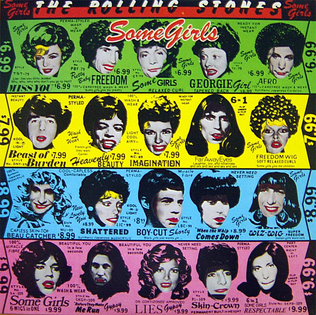
We’ve had a good run of wordy, introspective, or research-intensive columns around here lately, so it’s time for a hang out column. This one’s about album mixes.
Our friend Robert Keiton Smith once told me that he specifically started recording his own music so he could showcase his “big, fat bass.” As I said last week, his bass and kick drums always blow out the bottom of his recordings, especially when played through any speaker with some width, leaving the snare, guitar, and vocals to ride atop them. Consequently, I’ve thought of all of his mixes like this:

While we listened to Keiton’s latest album MISSING_TEXTURE, Nic and I lamented that in the era of AI, most mixing choices will revert to the mean, so we’ll likely lose idiosyncratic album mixes like Keiton’s.
So today we’re going to celebrate some good to great albums with some strange mixes.
Forgive the first few for their obviousness, but we’ve got to get them out of the way.
Metallica have multiple records with odd levels, but the most famous is …And Justice for All, in which the band nearly mixes bassist Jason Newsted off it entirely. In an interview during the press tour for a 2018 remaster of the album (which did NOT reinstate the bass), singer/guitarist James Hetfield said that it wasn’t a matter of fucking over the new guy Newsted (who had replaced the deceased Cliff Burton) but more a matter of Hetfield’s ears being thrashed from constant touring. Drummer Lars Ulrich added that it only sounded good to keep bumping up the treble. Maybe two drunks with tinnitus shouldn’t have been in charge of the mix. Talk to anybody with even cursory knowledge of the band, and they’ll probably point out how unbalanced this mix sounds.
Another famous weird mix is the Stooges’ classic third album 1973’s Raw Power, in which Iggy Pop mixed all the instruments into one stereo channel and all the vocals into another. The record company hated it, so they made David Bowie take a pass at it. That one ended up “thin as an epicure’s wrist” as Robert Christgau put it. Eventually, Pop got the chance to mix Raw Power again for a 1997 release. That’s the one I grew up on. The first chord of “Search and Destroy” is one of the loudest things I’ve heard in my life.
Speaking of loud, the Red Hot Chili Peppers’ Californication, became renowned not only as a comeback for the veteran funk punks, but for being mixed so hot that the CD version actually distorted and clipped.
Californication is probably the most prominent “victim” of the Loudness Wars, in which engineers used compression and equalization to push CDs beyond their maximum amplitude, effectively making the music louder so it would pop on the radio.
While the louder mix certainly makes “Scar Tissue” stand out, especially when following, say, “Hotel California” on a Jack FM station, it flattens any dynamic range, which over the course of an album, fatigues the ears.
The Loudness Wars probably peaked around 2007 – another Metallica album (and another Rick Rubin production; he did Californication) Death Magnetic, at which point, veteran engineers led a concerted effort to convince the industry to move away from overloaded mixes.
Today most music is streamed, and most streaming services equalize the volume, which means there’s literally no benefit to releasing an artificially loud album.
We’ve talked before about the loud-quiet-loud dynamic popularized in mixes of the late ‘80s and early ‘90s. Pixies’ Surfer Rosa, Slint’s Spiderland, and PJ Harvey’s Rid of Me go whisper quiet before exploding with giant choruses full of distorted guitars.
If the flattened dynamics of Californication resembles a topographical map of Kansas, Rid of Me resembles the Alps. On the opener “Rid of Me” Harvey creeps around the verse like a gremlin before reigning like an archangel when the chorus slams.
It’s all, actually, a little much.
Steve Albini’s stark production highlights the ugliness of the songs, but kind’ve makes it hard to hear what Harvey is actually saying. Look, I don’t care about whatever math equations or Terry Prichard short stories Slint mumble about during their nearly silent verses, but I do want to hear what Harvey is saying without riding my tape deck’s volume knob because she’s a dope rock and roll lyricist.
Nonetheless, Harvey felt the mix perfectly matched the tenor of her songs. However, I will note, it’s the only record in her catalog with a mix this extreme.
This week’s last Heck Record is the Flaming Lips’ 1997 curio Zaireeka, the album that you and your three friends had to mix yourselves. After a lineup shake-up in the mid-1990s, the Lips had to figure out how to plow forward; they bunted.
The later success of The Soft Bulletin and Yoshimi Battles the Pink Robots would ensure the band would never have to pay for their own LSD again, but first they released the album/stunt/goof Zaireeka, a 45-minute album spread across four CDs that has to be played on four separate CD players at the same time to be heard in its full quadraphonic splendor.
I’ve owned Zaireeka for 20 years and never listened to it the way the band intended. Who the fuck has four CD players?
As I said up top, one wonders if the days of the “weird” mix are numbered – it’s probably no surprise that none of the albums I mentioned came out in the past 20 years. Perhaps AI-enhanced audio tools will very soon not only take the job of the mixer, but make the whole process seem antiquated, as recordings “self-mix” on the fly.
Or, perhaps it’ll go the other way. Maybe a weird mix will become an indicator of the humanity behind a recording. Maybe Keiton’s fat-ass mixes will become en vogue, PJ Harvey freshest recordings will be entirely whispers and screams, and Metallica next remaster of …And Justice for All will scrape every sound below 4k Hz so it’s all treble.