Listen to “You’re Killing Me” off of Pavement’s 1989 debut EP Slay Tracks: 1933–1969. You wouldn’t expect this drumless, duel-guitar squall – more static than song – to be the first brick in the career of one of the most beloved bands of the 1990s.
Pavement is a shoo-in for indie rock’s Mt. Rushmore. Two of their albums landed on Pitchfork’s Best Albums of the 1990s list, and three landed on Rolling Stones’ 500 Greatest Albums Ever list. They’ve starred in multiple documentaries, and, last year, had a musical and Hollywood movie recount their legend. Their occasional reunion tours rake in cash and press. And, although they may not be the most popular alternative band around, among their total listeners, the greatest percentage of them probably consider Pavement their favorite band. If you want to make an aging, bookish, smartassed boy in your life feel seen, ask them about Pavement. And if you really want to poke them, ask them, “If Pavement is so good, why don’t they play their instruments very well?”
I love Pavement. If they’re not my favorite band, they’re damn close. I vividly remember the first time I heard them (Slanted and Enchanted in a college dorm room a few years after their initial break up), I’ve favorite memories of attending their 2009 reunion shows with lifelong friends, and I never tire of their music.
Pavement are masters of paradox. Their lyrics are inscrutable, but inviting. Their guitars are noisy, but not scary. They rock, but don’t get sweaty. They jam, but don’t noodle. Their singers can’t really hit their notes, but try anyway…and succeed. They sha-la-la-la-la-la and bap-bap-badda-bop and are “tryiiiiiiiiiiiiiing” in “toooooooooooooooooookyoooooooooooo.” They can’t play their instruments very well individually, but they play them perfectly together.
(Sidenote: homies can play. Ninety-nine percent of good bands who “can’t play” or are heralded for their “amateurism” are playing that way intentionally. Guitar Youtube and Pro Tool’s digital grid have given us a very clinical perspective on how music should sound.)
What I find most remarkable about the career of one of rock’s most special bands is how close it came to not happening at all.
When looking backwards, history seems inevitable, but, while living through it, it’s rife with contingency.
Guitarist/singers and childhood friends Stephen Malkmus and Scott Kannberg chose to record Slay Tracks at Gary Young’s Louder Than You Think studio because it was the cheaper of the two studios in their hometown of Stockton, California. While tracking, Young, a decade-older hippie, asked if the duo wanted drums on their tracks. They shrugged; Young played drums. And thus…Pavement 1.0.
Although Malkmus claims they had no greater ambitions than to make a record, Kannberg sent copies of Slay Tracks to critics…who actually reviewed it. Positively.
The tape circled among the cognoscenti. Great Britain’s Rolling Stone, Spin, called it a “party,” Robert Christgau gave it an A- in The Village Voice, and The Wedding Present covered the EP’s best song “Box Elder” on John Peel’s influential radio show.
Back then, the music press was a lot smaller, and, on a lark, these open-mic’rs got press that big mainstream bands would’ve killed for. Today you couldn’t get press like that before releasing your first album unless you were a gorgeous Brooklynite whose parents were a hedge fund manager and an entertainment lawyer.
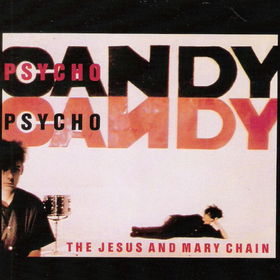
Slay Tracks also had the perfect sound for the era. Its tuneful melange of melody and noise recalled The Jesus and Mary Chain’s Psychocandy and Sonic Youth, but where JAMC’s gothic indifference felt like a put-on and Sonic Youth intellectualism could come across as arch, Pavement seemed like nice, regular boys.
It was also the first time in music history when having cruddy-sounding recordings actually helped a band.
Popular music in the late 1980’s was all about big drums, flashy guitar solos, overwrought vocals, and very precise recording. On one of the era’s biggest albums Hysteria, producer Mutt Lange had Def Leppard overdub individual notes to create a crystalline rock sound.
Critics were looking for a change. And they found it in the ear-piercing trash rock of NYC scenesters Pussy Galore, earnest DIY home-tapers Sebadoh, and, yes, our boys from Stockton, Pavement.
Pavement recorded two more EPs at Louder Than You Think, Demolition Plot J-7 and Perfect Sound Forever, before releasing the Pavement 1.0 masterpiece, today’s Heck Record, Slanted and Enchanted.
The opener, “Summer Babe,” is one of rock’s best songs. It’s structured like a single, but in lieu of a chorus, there’s Malkmus’s searching lead guitar. In lieu of a guitar hook, there’s a repeating bass figure and Young’s recurring crash cymbal hits.
And then there are the lyrics. The first lines: “Ice, baby / I saw your girlfriend, and she was / Eating her fingers like they’re just another meal.” That’s evocative, but I’m not truly sure what it means, and is that a Vanilla Ice nod?
I think it might be. On the third verse, Malkmus cracks a laugh after singing the line: “Minerals, ice deposit daily.” It’s an inside joke only he understands. Malkmus – who once claimed to have an infinite amount of lyrics, but a finite amount of melodies (most songwriters would probably say the reverse) – has never shied away from contemporary pop culture references. Three years later, a relatively benign dig at the Smashing Pumpkins in “Range Life” supposedly got Pavement kicked off 1994’s Lollapalooza after head Pumpkin Billy Corgan gave its promoters the ultimatum: me or them.
Despite its popularity, you won’t find many covers of “Summer Babe” because it hangs together with duct tape and bubblegum. Remove any one element of it, and it’s no longer “Summer Babe.”
Tracks two and three, “Trigger Cut/ Wounded-Kite at :17” and “No Life Singed Her” offer the perfect Pavement dichotomy. “Trigger Cut” is a melodic relationship lament, while “No Life” is an excuse for a thrashing descending chord progression and yelling.
“Conduit for Sale” is the song that hooked me back a million years ago in my dorm room. As a fan of the Velvet Underground at their weirdest, I appreciate the way it tells a short story (about a nobleman giving away his land) sandwiched between an increasingly unhinged chorus. “I’m tryin’.” Indeed.
(Since their inception, Pavement have been dogged for ripping off The Fall. As a fan of both bands, I always thought the similarities were pretty overblown, but, in all fairness, “Conduit for Sale” straight up rips the structure of The Fall’s “New Face in Hell.”)
“Zuirch is Stained” gives us Pavement’s first country song. Critic Steven Hyden argued Pavement could’ve had a successful career as an alt-country band. Thank god that didn’t happen. This would, however, fit nicely on a playlist next to Uncle Tupelo.
On “Here,” Pavement give us their first full-blown ballad, and some of the best lyrics of their career:
I was dressed for success
But success it never comes
And I’m the only one who laughs
At your jokes when they are so bad
And your jokes are always bad
But they’re not as bad as this
From the books of Kurt Vonnegut and Joseph Heller to the films of the Coen Brothers and Wes Anderson, artists find humor among pools of depression. I don’t know what Malkmus was imagining when he wrote this song, but it’s perfect for any time you don’t like where you are. I imagine it playing in Aron Ralston’s head on repeat before he decided to saw off his arm to escape his 127 Hours situation.
Although later Pavement would eschew the noisy songlets that made their initial EPs both fun and obnoxious, Slanted and Enchanted still gives us the minor “Chelsey’s Little Wrists” which ends with mouth sounds and the catchy “Two States” which seemingly exists to make the joke that the band wants “two states” but “nothing south.” Haha.
Although they’re not among their greatest hits, “Perfume-V,” “Fame Throwa” and “Jackals, False Grails: The Lonesome Era” give us a couple more vocal hooks (“I’ve got one only life to give”, “I don’t feel okay,” “He’s one of our nation’s spies”), a couple new settings on their distortion pedals (that synth-like sound on “Fame Throwa”), a cool false ending (“Fame Throwa,” again), and, I hear, a little oddball garage rock homage (the Monks in, yet again, “Fame Throwa.”)
“Our Singer” is Pavement’s “Rock and Roll Suicide.” Only, unlike David Bowie’s ZIggy Stardust character, Pavement’s never even gets to live his dream. “I’ve dreamt of this / but it never comes” because “the sun comes up” and “the blisters burn my soul.” Aw, fuck, man. Time to pack it in.
Except that for Pavement, it was just the beginning of the dream.
Well, for most of the band. Buoyed by Mark Ibold on bass and Bob Nastrovitch on percussion (and yelling), the band played their first shows in 1992, where they learned that Young just could just not stay sober long enough to be an effective drummer. Nastrovitch, who was tasked with babysitting Young, said in the 2023 documentary Louder Than You Think that when he was 90% on, there were no issues, but that by the end of his time in the band, he was on about 50% of the time.
Depending on who’s telling the story, he either quit or was fired in 1993.
The real bummer is that Young, who would sometimes steal the spotlight from the often retiring Malkmus and Kannberg, came up with really atypical drum parts. Like the Velvets’ Maureen Tucker or Meg White, what he lacked in chops, he made up for in imagination. Most indie rock bands of the era had drummers like R.E.M.’s Bill Berry – propulsive, minimalist, tasteful punk rockers – but Young appreciated prog masters like King Crimson’s Bill Buford. Listen to the tom fills at the end of “Summer Babe” or the fall-down-the-stairs intro to “In the Mouth of the Desert.” Berry would never draw that much attention to himself. (For the record, I love Berry, too.)
Makmus admitted it was the end of an era after Young left the band. He also said, “I think Slanted and Enchanted probably is the best record we made, only because it’s less self-conscious and has an unrepeatable energy about it.” I love all their records, but I agree. They would make a more perfect record (Crooked Rain, Crooked Rain), a more poppy record (Brighten the Corners) and, somehow, a messier album (Wowie Zowie), but would never best their first. But, like Joseph Heller said when asked why he never topped his first novel Catch-22: “Who has?”
In a move as spontaneous and deliberate as picking Young to be their drummer, Pavement hired Steve West to replace him. West had been Malkmus’s coworker…oh, and he knew how to play drums. Thus: Pavement 2.0.
There is no grand plan.