Back when Lee and I were in Flowlines together, we had a disagreement about songwriting. The way I saw it, if I employed a distinct musical technique on a song (say a shuffle beat, or an Andalusian cadence), then that was my one opportunity to use that technique, and so I had better nail the song.
Lee thought this was dumb. He thought I should be allowed to iterate as many times as I wanted. To him, musical ideas were like colors that we could use any way we wanted, and if that meant I had fifteen hot pink paintings because I really liked an Andalusian cadence, well, so be it. (I don’t know why Andalusian cadences are pink, but they’re certainly more spicy than burnt umber.) After all, Monet painted a bunch of haystacks, so why couldn’t I make a whole series of songs employing the diatonic phrygian tetrachord?
Today, I don’t feel as fundamentalist about songwriting choices, especially since once outré musical ideas like the Azagthoth chord (a power chord with a #5) have become a regular part of my songwriting vocabulary. If I had promised to only write one garage rock song using a death metal chord, I would’ve missed out on writing at least a half dozen songs that I think are pretty neat-o.
Also, importantly, iterating is where you break new ground in music. After nearly 80 years of rock music, you’ve got to stack weird on top of weird on top of weird to get someplace that hasn’t been trod before, because everything obvious has already been done.
—
I’m writing this week’s column to celebrate the release of my friends’ new music. Both Chris Shrift and Robert Keiton Smith make indie/garage rock music. And they make a lot of it. Which, if I’m being honest with myself, makes me kind’ve jealous.
…For I used to be a shooter, too.
Some people are Kobe Bryants. They put up numbers.
In my early twenties, inspired by hyper-prolific garage rockers like Billy Childish, Ty Segall, and the late Jay Reatard, I used to crank out the tunes. One month, I even dedicated myself to writing and recording a song a day.
Bob Dylan famously wrote many of his early hits on a typewriter. Recalling the time, he felt he had “so much to say.” During a turbulent couple years in his life, Patterson Hood of The Drive-By Truckers claimed to have written 500 songs. With over 3,000 songs to her name, Dolly Parton is one of the most prolific superstars of all time.
That’s not to say that all of the songs they wrote were keepers, though, with Hood claiming that not even one in five were “good” but that “if you write a thousand bad ones and you can learn something from each one, you’ll probably be ready when the good one comes along.”
Of my song-a-day songs, about half of them were never heard from again. But a few made it through the rounds of cuts, got rewritten, got played in practice, got played live, and one or two of them were eventually recorded and released on albums.
Listening to Keiton and Chris’s back catalogs, I appreciate not only the quantity of work that they’ve put into their music, but how the quality has improved with each passing year.
I also get to see the stylistic detours they’ve taken along the way, from Shrift’s Fruity Loops electronica to Weird Year to Keiton’s acoustic Wetland and Lips EP. For what it’s worth, they’ve both released Christmas albums as well. Shooters don’t take holidays off.
—
This week’s Heck Record belongs to one of the biggest rock & roll shooters in modern times, Will Toledo, who released nine albums (including a whopper over two hours) on Bandcamp before re-recording his “greatest hits” for Matador Records, Teens of Style in 2015, a little after his 24th birthday.
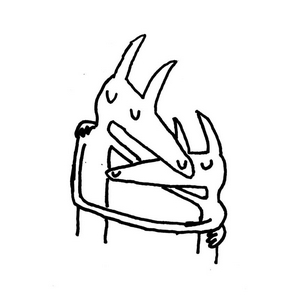
After recording an album of all new tunes, my favorite of his Teens of Denial, in 2016, Toledo returned to his catalog to re-record his 2011 album Twin Fantasy, with the backing of Matador and his new hot shit four-piece.
Toledo makes indie rock not all that different from Keiton and Chris, in that it’s indie rock: unpretentious, DIY, and song-oriented. Like them, I imagine Toledo spent a lot of time writing with a DAW and recording by himself. His band’s name comes from the backdrop he used to dampen sound while recording his vocals to a laptop in the back seat of his parents’ car.
Where Toledo breaks from my buddies is that he shoots way more threes. Eight of Twin Fantasy’s ten songs are over five-minutes-long, and two are well over ten. Toledo had prog-sized ambitions from at least 2011, when he obsessed over completing the three-part-song suite, Twin Fantasy’s second track “Beach Life-In-Death” about an unrequited gay relationship.
“Beach Life-In-Death” is as close to proof of concept for Car Seat Headrest as “Touch Me, I’m Sick” is to Mudhoney, or “Psycho Killer” is to Talking Heads. It touches on so many of Toledo’s pet themes – the mundanity of existence, depression, being bored with drugs, death, coming to terms with your identity, and pop music’s favorite, lopsided love – but explicates them with the tools of rock: guitars, drums, bass, keyboards…and more exultant background vocals than Boston’s 1976 self-titled debut.
In recent years, we’ve all slowed down. Toledo has released two studio albums since Twin Fantasy, and Chris and Keiton have dropped off from their monster early years. But that’s the nature of the beast. I’m sure Patterson Hood’s not going to write 500 songs in three years ever again.
But that’s because he doesn’t need to. He – like Chris and Keiton and Will Toledo – knows who he is as an artist, knows what it takes to make a good song, and doesn’t feel the need to shoot…all…the…time.


Comments