D’Angelo’s second album Voodoo wasn’t for me…or so I thought.
Look at that cover! D’Angelo, clad only in a crucifix, looks like he’s going to fuck me. I might giggle at his muscles, but he’s serious. It’s going down. No, it doesn’t matter that it’s the middle of the day, that I’ve got to go to the store, that my sister is dropping off her kids any minute now, that I’m gross from working in the garden. D’Angelo is going to fuck me. And he’s gonna make me come.
This is a disrespectful way to begin a tribute to one of the best musicians of his generation, an idiosyncratic genius who this Tuesday died way too early at 51.
D’Angelo didn’t want to be known for his poppin’ pecs or his abs and belly button, whose graphic starring role in the music video for Voodoo’s third single “Untitled (How Does It Feel)” sent his career into the stratosphere.
D’Angelo, who saw himself in the lineage of Curtis Mayfield, Marvin Gaye, and Prince, didn’t like that the market forces of ‘90s R&B encouraged him to trade on his gym physique instead of his masterful merger of soul and hip hop. Although he was raised as a preacher’s son, D’Angelo certainly liked getting down, getting sweaty, getting funky, but not in the superficial way captured on an album cover or a music video.
Voodoo – in spite of D’Angelo far too perfect abs – is absolutely for me.
It’s a deeply funky, constantly mutating collection of some of the best grooves put to tape. It honors the history of black music, while forging its own path. Voodoo’s knotty rhythms recall Sly and the Family Stone’s There’s a Riot Goin’ On and the swampier atolls of Parliament/Funkadelic, but references everything from ragtime to Teddy Pendergast.
We hear the future on “Left and Right,” which features Method Man & Redman spitting bars, and the J Dilla-inspired “drunk drums” of “Playa Playa,” a tune so loose booty it almost comes apart at the seams.
D’Angelo, who had a crystalline falsetto, rarely lets it loose, preferring to keep it low in the mix as if it’s just another instrument – just another gorgeous bird tweeting in the swamp.
Like his hero Prince, D’Angelo played and arranged most of the music on the Voodoo, but he also surrounded himself with talent. Questlove, Pino Palladino, Roy Hargrove, Charlie Hunter and DJ Premiere, studio hotshots known as the Soulquarians, played on Voodoo, as well as albums by likeminded artists Erykah Badu, Common, and the Roots. At the time, the media branded their music neo soul, but by embracing live instrumentation and eschewing the digital sounds and recording techniques of the time, what they were doing was decidedly retro.
Voodoo instantly became a critical fav, and once the “Untitled (How Does it Feel)” video hit MTV, the record began selling like gangbusters. D’Angelo went from a niche R&B singer that the industry had almost given up on to the toast of the town.
[Scary Music]
However, over the next decade, D’Angelo would become known more for missed opportunities, drug and DUI arrests, and no longer having the muscled abs from the “Untitled (How Does it Feel)” music video than for releasing music.
***
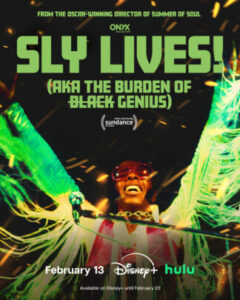
Earlier this year Questlove released Sly Lives! (aka The Burden of Black Genius), a documentary about Sly Stone, in which D’Angelo opines about the dangers awaiting black artists.
Unlike, say, Chris Martin, who, though he gets plagued by questions about the meaning of “Yellow,” never gets asked how to solve racial economic inequality, Black artists are expected to advocate for their community, engage in politics, and be a role model, while never losing touch with their roots – this on top of their obligations as an artist to never let the quality of their work slip, and, in D’Angelo’s case, maintain six pack abs.
The documentary explores how that’s too much responsibility for any one person, using Stone’s brilliant first five years of fame as a window to explain his last fifty years of drug addiction, intermittent homelessness, and isolation.
Questlove surmises that the only way for black artists to avoid getting swallowed by fame is to step back from the spotlight.
D’Angelo struggled with his fame, his status as a sex symbol, and his “obligations” as a black genius, but he never succumbed to them like Stone…because D’Angelo released Black Messiah in 2014.
Unlike any music that Stone released after 1973, Black Messiah is every bit as brilliant as the music D’Angelo released earlier in his career.
On Black Messiah, D’Angelo and his co-conspirators the Vanguard (many of whom were Soulquarians), dig deeper into the Earth’s crust to expose the molten funk underneath.
“Till It’s Done (Tutu)” is the catchiest groove they ever wrote, “1000 Deaths” is the heaviest, and “Prayer” is the funkiest.
Black Messiah is a worthy sequel to one of the best albums of the 21st century, and proof that an artist can have it, lose it, and take it back again. D’Angelo spent the 2000s in the wilderness, but he found his way home. To me, that’s as impressive as creating Voodoo in the first place.
Last June, Sly Stone died. Now D’Angelo is gone, too. The world will never be as funky again.