Earlier last month Jenn Pellet wrote an appreciation of Patti Smith’s Horses on its 50th anniversary for part of its Sunday album series.
The Heck Records column is about music, but it’s also about writing, and I want to recognize that in an era of half-baked hot takes, AI slop, and bloated “content,” Pitchfork’s Sunday album series publishes the best longform criticism I regularly read. What they do every week makes what I do here feel like some kiddie table, sandbox bullshit.
Pellet covers Smith’s storybook rise from a South Jersey Jehovah’s Witness apostate to the toast of NYC cognoscenti after a star-making poetry reading at St. Mark’s Church on February 10, 1971 while backed by guitarist Lenny Kaye. “Our story accordingly begins at church,” Pellet writes, “on Bertolt Brecht’s birthday, Lou Reed in the pews, full moon.”
Nice. Tasty.
Industry insiders offered the poet a record deal that she only signed with the guarantee that she would have full control of the product. Horses, a brilliant car crash of garage rock and spoken work, arrived in 1975, presaging and inspiring the punk rock revolution.
Look, if you want to know about Smith, read Pellet’s article or one of Smith’s many memoirs, and, for god’s sake, listen to Horses, while staring at its magnificent Robert Mapplethorpe-shot cover (oh, yeah, Smith knew everyone; she and the photographer were just kids together).
This article is about the artists Smith inspired, creative souls with non-traditional singing styles who used the vocabulary of rock & roll to do their own thing. In some cases they’re literary types who fell in with guitars; in others they’re vocalists with unusual voices, in all cases, they probably wouldn’t be musicians without the inspiration of Patti Smith.
Also, I want to acknowledge that Smith wasn’t the first person – not even the first New Yorker — to put poetry to a beat. By the time Smith released Horses, Gil-Scott Heron had released five albums of jazz and R&B-inflected spoken word, and the Last Poets had been investigated by COINTELPRO for their black power messages on the chants and congas album This is Madness. True talk: like most things music, black people came upon this shit first.
THE JIM CAROLL BAND’S CATHOLIC BOY: Had Smith grown up in the Boroughs instead of Jersey, she too may have sold her body for junk in high school like Jim Caroll, whose precocious dissolution inspired the memoir The Basketball Diaries published before his 30th birthday. In 1978, Caroll’s rock & roll ambitions took hold when he shared his poetry opening a Patti Smith (!) show, as her band vamped underneath. On his 1980 debut album, Caroll makes very few concessions to the music, and his backing band makes few concessions to him. They play punky garage rock; he recites his rhythmic, streetwise poetry. “People Who Died” is the well-known classic. Probably won’t surprise you: Smith and Caroll briefly dated.
X’s LOS ANGELES: In a pre-Patti era, Exene Cervenka and John Doe would’ve just become writers (which they became anyway), but the creative freedom afforded by punk rock drew these two LA bohos to it like moths to flames. Good for us, X are the best LA band from punk’s first wave (sorry, Black Flag; you’re good, too). Sung with raggedly harmonizing dual vocals, X’s literary songs about the West Coast’s demimonde parallel Smith and Carroll’s. Man, all the big cities back then were sleazy, garbage-strewn hellscapes. But…the rent was cheap.
THE FALL’S THIS NATION’S SAVING GRACE: Headed (or rather commanded) by the irascible Mancunian Mark E. Smith, the Fall had more members than Parliament (the band and the governing body) and released more albums than there are stars in the sky. Smith was the type of crank who, at an earlier point in history, would’ve spent his whole life getting pissed and ranting to the dullards at the pub. Fortunately, he was born late enough that he could take that show on the road. In his inimitable drawl, Smith spun hundreds of fantastical, cryptic yarns over rudimentary garage rock. I don’t always know what he’s going on about, but, truth be told, I don’t always know what Patti’s going on about either.
LIFE WITHOUT BUILDINGS’ ANY OTHER CITY: Sue Tompkins’s voice soars above Life Without Buildings’ major key post-punk. On the opener “PS Exclusive,” she says the phrase “the right stuff” five times in a row, in five different ways. Ultimately she’ll say it, among a handful of other lyrics, almost fifty times in four minutes. Instead of tiresome, it’s energizing to hear her echolalia. For a lifelong artist (Tompkins is known more for her visual art than her music, and this album is the band’s only studio release), “the right stuff” is her version of Monet’s haystacks, variations on a theme. Any Other City gives us ten more haystacks for her to work her mouth around: “Ting, ting,” “If I lose you,” “My lips are sealed.”
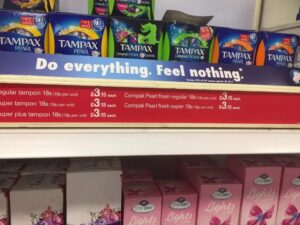
DRY CLEANING’S NEW LONG LEG: IN 2022, Pitchfork listed Dry Cleaning along with Mitski and Cate Le Bon as in the leading wave of “dissociation” music. Writer Jayson Greene described DC’s singer Florence Shaw as the “anti-David Lee Roth, committed to sucking the color out of the surroundings.” Her bone-dry, monotone delivery makes her surrealistic (and often hilariously swear-y) one-liners pop all the more so over the band’s post-punk instrumentals. “Do everything, feel nothing,” off of their signature tune “Scratchcard Lanyard” might be “In God We Trust” for the post-pandemic era. Or it might just be a tampon advertisement.