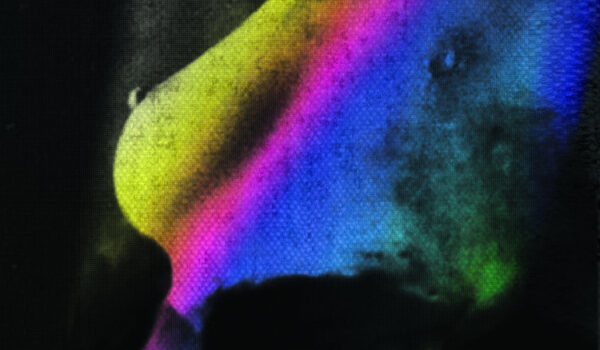
I’ve said it before and I’ll say it again, one of my favorite things about getting older is watching my friends develop and mature as artists. My Part Time Ghost singer/bassist Robert Keiton Smith released my favorite album of his back in April, TEXTURE_MISSING.
And that’s saying something, because Keiton is a shooter. He takes shots. His Bandcamp alone lists 22 separate albums, and that doesn’t include his work with other musicians. He’s got the productivity of primetime Ty Segall or Billy Childish, and works in as many genres, from country/folk to dance to pop to hard rock to weird noise that can’t really be classified as anything other than weird noise.
But I think his heart belongs to indie rock, and TEXTURE_MISSING is my favorite of his releases because it’s his most indie rocking.
It’s also his most consistent. On TEXTURE_MISSING, Keiton only takes high percentage shots: layups, dunks, that one Tim Duncan bank shot that he never seemed to miss. Keiton’s working in his sweet spot, cranking out 2020 indie tunes with an ‘80s sheen, as if he chucked INXS, New Order, and Modest Mouse in a blender with some Nvidia graphics cards.
The album blasts out the gate with the Royal Trux-ian stomp of “Trash Cat,” whose soaring chorus paints a heroic portrait of a stoner loser. It’s also the most divisive song on the album because it buries its subject under a mountain of heavy distortion. Keiton favors ear-drum rattling amounts of bass. Unless you’re expecting it, you might wonder if your earbuds are broken. They’re not. This low-end EQ pervert mixed it that way on purpose.
The best albums follow a monster opener with a ripping track two, think: “Rip this Joint” on Exile on Main Street or “Rock and Roll” on Zeppelin IV. On “Ran Into Fame,” RKS plays all the Beastie Boys in an overdriven punk rap. It ends when the lead guitar twirls into a Spirograph tornado.
One of RKS’s biggest tricks is taking chintzy-sounding effects and pairing them with fat-ass distortion. On “Another Beat” he takes “Runaway”’s tinkling piano, adds a palm muted bass with the gain cranked, and delivers the song’s chill out message in a laconic drawl. There’s no need to get all worked up about all this noise.
Keiton, who’s much more of a techno-optimist than I, expresses his positivity on the upbeat “Tiktok,” which celebrates “AI”, “crypto”, and its namesake streaming service. “Gosh, oh golly,” Keiton, I think it’s going to at the very least destroy the economy. If there was any justice in the world, Meta would give him a million dollars to use “Tiktok” in Facebook ads to promote Gemini.
“Limelight” has the album’s most fun arrangement. It reiterates on the hurricane lead guitar of “Ran Into Fame” (of which “Limelight” is a kind’ve sequel), comes to a complete stop, and “Strawberry Fields Forever”s us with a final chorus.
The boozy “Don’t Go Changing” is a charming singalong about loving someone just the way they are. I loved playing in a band with Keiton because he could go places as a singer and lyricist that I couldn’t. Keiton can credibly write about being head over heels in love or so horny he’s going to bust without making it seem cloying or precious. Whenever I tried to write or sing in that mode, I always felt gross, and I’ll bet people thought I was creepy. Some people shouldn’t sing about fucking. Keiton absolutely should.
A holy union of Beck and LCD Soundsystem, the robo-funk of “Minimum” laments the artist’s grind. If I use my time to make art, and it doesn’t make money, then I’ll have to use my time to make money, which means I don’t have time to make art. Twenty years from now, if you’re wondering why all artists are rich nepo-babies, it’s because the economy is fucked for low-born weirdos to get good enough at art to make something worth paying for. Also, you should buy TEXTURE_MISSING.
“Edges and Roots” recalls the compressed funk of Some Girls-era Rolling Stones. I don’t think Mick Jagger is one of Keiton’s guys, but, maybe at this point, Jagger is for everybody.
If “Edges and Roots” harkens back to the ‘70s, “Warm Hearted” feels like a forgotten freak folk song from the late ‘60s, where love is treated like a mellow drug trip.
Last week I said that Pile had the best deployed f-bomb of 2025, Keiton has the second best when he says we’re such a “sick fuck” on the sunset vaporwave of “Much More Like Myself.”
On “Dark Souls” Keiton outs himself as a gamer (though you could’ve probably guessed that from the Blender error code that gives the album its name) and provides us with his biggest hook: “How dark is your soul?”
The official closer, “This is the Life” is the closest Keiton gets to Lonely Island, and it’s more like a half-court heave than anything else on the record. The multi-part suite cycles through different vocal effects and drum patterns before fading out in a wash of guitar fizz.
On the secret closer, RKS interpolates Tom Waits’ “Step Right Up” over Mobb Deep synths, and raps about how “we’ve got a government running like a slot machine.” “The house always wins / the fix is in.” For real.
I’m so lucky to have friends as talented and dedicated as Keiton in my life. His art, like his friendship, makes my life immensely richer.