There’s no sexy mystery to the actual process of writing songs.
I read an interview where John Fogerty talked about staying up late and drinking coffee to crank out the hits that made up Creedence Clearwater Revival’s three #2 albums in 1969.
In the History of the Eagles documentary, Glenn Frey talks about living in an apartment under Jackson Browne in the early ‘70s. Every morning Frey awakened to Browne pounding on his piano for hours on end, writing all those sensitive songs that made all those feather-haired boys and girls want to fuck each other.
What I’m getting at is that the process of songwriting is generally lonely work. You sit down with your guitar or piano or modular rack or DAW, and you grind. You iterate on one idea until you find it good or original enough and then you move on to the next.
Honestly, a lot of the time, it feels like digging into frozen ground with your fingernails. But sometimes you’ll catch a flicker of inspiration, and unearth it like a gold vein.
For me, this process involves sitting in a chair with an acoustic guitar, my computer open to a word processing program. It’s the opposite of magical. This isn’t me and my homies free-styling over a beat, passing around a blunt.
This shit looks and feels like office work.
Eventually a song will take shape. I’ll play it through a dozen or so times on a guitar, tune the lyrics in a Google doc, set a rudimentary drum track and record a demo in a DAW (I use Reaper because it’s cheap and reminds me of Cubase, my original recording software).
When the “magic” is complete, I email it to the rest of the band. That’s right, the “magic” clogs up their inboxes with the 50 or 100 or 1000 pieces of capitalistic effluvia demanding their attention and deserving none of it.
At our next practice, the magic actually happens.
See, everything I’ve done is just grunt work, digging pieces of corpses out of their graves and sewing them together. I’m fucking Igor.
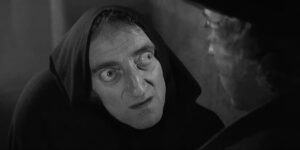
But the band is Dr. Frankenstein, and they’ve got the electricity, figuratively and literally, to bring the song to life. They turn an email into art.
This bloodless, solo, email process is all well and good for creating certain types of songs: garage rock, power pop, folk – anything with a strong rhythm guitar and a vocal hook. It’s a great way to write a song with a standard, easily discernable structure: couple verses, couple choruses, a bridge, an outro. Signed, sealed, delivered. Another brick in the wall.
But as I’ve gotten more interested in making layered, discordant music, I find this process lacking.
Take this as a for instance…the most dramatic thing you can do by yourself with an acoustic guitar is to borrow a chord from another key.
I’ve begun doing this all the time now.
Do something once, it’s ingenious. Do it twice, it’s part of your style. Do it five, six, seven times, it’s your cliche. Like any would-be artist, I really don’t want to repeat myself. But here I am, borrowing chords to try to hide the fact that I’m writing yet another folk song…on an acoustic guitar…in front of a computer.
—
You imagine that as you improve as a musician, your ability to generate new, original material will improve as well.
That’s not the case.
If anything, it’s harder.
And it should be.
The more you learn, the more you discover that there’s nothing new under the sun. Ideas that would’ve struck a younger you as fresh and inventive seem passe.
Especially if you specifically have done them in the past.
That’s the real kicker. You’re not only competing against the whole corpus of art from cave drawing to hyperpop, you’re competing against your own earlier work.
—
This week’s Heck Record, Bruce Springsteen’s Nebraska, celebrates a major artist taking a left turn in a way that revitalized their career and refilled their artistic stamina bar.
I’m not going to spend much time writing about the actual record, because, with the release of the film Springsteen: Deliver Me from Nowhere, in which the sexy rat from The Bear plays a bedraggled Springsteen, there’ll be dozens of articles online dissecting Nebraska’s greatness. *
This week’s album could’ve been U2’s Achtung Baby, in which U2, after a decade of being the most sincere band in rock & roll, discovered irony, or Talking Heads’ Remain in Light, in which the most tightly wound band of the ‘70s embraced funk and just jammed.
With Nebraska, Springsteen famously released the polished-up demos of songs he had intended to flesh out with the E Street Band. Unlike antiseptic demos I’ve emailed to my bands to turn into real songs, Springsteen’s arrived fully formed. Just add a touch of delay, a touch of reverb, some ghostly backup vocals, and a smidge of mandolin.
His Frankenstein proved to be acoustic, walking without electricity.
The press heralded the album upon its arrival and it only continues to grow in stature. Even critics who find the consummate tryhard Springsteen overly sweaty, his marathon live shows sadistic (is this unreasonably fit 75-year-old guy trying to kill his elderly audience?), and his E Street Band’s rock & roll gang kinda hokey, can’t help but admire the stark, sinister, despairing album he released in the middle of his rise to become one of the most famous musicians in the world.
Nebraska allowed Springsteen to come down from the rock & roll grandeur of the double album The River and its global, yearlong tour, recharge his creative batteries, and release an even bigger, bolder album with an even bigger, longer tour with Born in the U.S.A. a little less than two years later. Nebraska is another peak in the Himalayas.
* I will allow one moment of commentary. How many artists of Springsteen’s stature would write a song about potentially wasting a state trooper? Bob Dylan might. Leonard Cohen absolutely would. But I think it’s a shorter list than you might imagine. We’re definitely never hearing U2’s version of “State Trooper.”