This week, we’re finishing out the rest of Loudwire’s top ten black metal albums. Again, we’ll be evaluating the albums on the quality of their production (PQ; scale of one to three tapes) and how well their story could be adapted into a Netflix true crime documentary series (Netflixability; one to three burned churches).
SATYRICON’S NEMESIS DIVINA
When it comes down to it, black metal, in its pure, unadulterated form, really only existed for a few years, say 1991-1994, before bands started cutting it with other forms of metal.
Funnily enough, the genre black metal initially sought to differentiate itself from, death metal, became the genre that so many of its practitioners ran towards when they wanted to expand their sound. As such, some of the most mature black metal albums, like Satyricon’s Nemesis Divina have as much in common with Darkthrone’s Unholy Trilogy as the Swedish melodic death metal band At the Gates’ Slaughter of the Soul.
Personally, I dig these diluted black metal-pieces because they’re simply more fun than the wintry gloom of the original second wave death metal albums.
Metal’s wonderful for its theatrics, catharsis, and chops. Yet, quite frankly, minus some dramatic corpse paint here and there, black metal isn’t interested in any of that stuff. So gimme a black metal band’s latter day work, like Satyricon’s fourth album Nemesis Divina, which shows a band at the height of their abilities, even if it’s stepped on with some riff-y speed metal.
PQ: This was a mature band making a mature record. Its production is fantastic. Three tapes.
Netflixability: The duo that comprise Satyricon – Satyr and Frost – seem to be among the more balanced musicians to escape from the Norwegian black metal scene. Satyr sold a vineyard to a beverage company. Frost is a vegan. Oh, and Satyr has a brain tumor, but it’s not a big deal unless it gets bigger. I guess that’s pretty metal. One burning church.
ROTTING CHRIST’S THY MIGHTY CONTRACT
Honestly, I think Thy Mighty Contract made Loudwire’s list more for what Rotting Christ represents than for the black-metal-ness of its music. Thy Mighty Contract isn’t as suffocating as De Mysteriis Dom Sathanas, nor as ambient as Hvis Lyset Tar Oss, and its rinky-dink keyboards aren’t as integral as, say, those on Emperor’s In the Nightside Eclipse, which came out a year later. There’s also the fact that the edgiest part of this album is the band’s name. I don’t think most hard rock and metal fans would be too off put if you put “Exiled Archangels” on a playlist between Metallica and Pantera.
So then what do Rotting Christ represent? Why the export of black metal itself. Rotting Christ hails from Athens, Greece. If denizens of the sunny Mediterranean could relate to music made by people who barely see the sun for six months of every year, maybe there’s something universal in all these blast beats, blasphemy, and tremolo picking.
PQ: Sounds like your local metal band recorded it at your local studio. Two tapes.
Netflixibility: Thy Mighty Contract was the first of fourteen (and counting) studio albums recorded by brothers Sakis and Themis Tolis. Unless they’ve a really cinematically dysfunctional relationship, I don’t see Nextflix making a very compelling documentary series about them. Let alone a true crime series. One burning church.
BURZUM’S HVIS LYSET TAR OSS
What’s weird about the one-man band Burzum is that the music made by the most notorious member of the Norwegian black metal community, Varg Vikernes, may be the easiest to listen to. Consequently, it’s why Burzum has sprung up in places that you wouldn’t typically expect to see it.
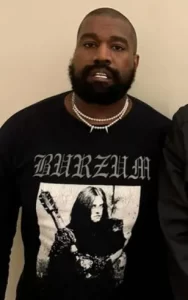
Burzum’s medium-slow tempos, sheets of distorted guitar, and relative simplicity make it easy-listening for fans of shoegaze, noise rock, and other flavors of extreme metal. Compared to the knotty, claustrophobic music made by Mayhem and Emperor, Burzum seems like a refreshing walk in the park. It’s certainly the only black metal that can qualify as “soothing.”
I imagine Burzum is also the most popular second black metal band for hipsters who got into the genre through the 2010s success of Deafheaven, who touted the band’s sound, while denouncing its creator’s “politics.”
PQ: On his first albums, Vikernes sought to produce music that was barely hi-fi enough to be listenable. But Hvis Lyset Tar Oss is his third album, which meant that he had figured out that it’s really only satisfying to stand by that aesthetic principle for an album or two. Two tapes.
Netflixability: Aside from murdering black metal’s most important figure Euronymous, I don’t find Vikernes all that interesting, and we’ve had more than enough opportunities over the years to hear him parse exactly what flavor of white supremacy to which he ascribes. Is he an esoteric Nazi, an Odinist, a pagan nationalist? Who gives a shit?
What I do know is that Vikernes is at least as into Lord of the Rings and Dungeons & Dragons as white hate. Shit, the dude even made a table-top role playing game that sounds really complicated – and, you know, racist. The Darkling characters get a skill boost to “spear-chucking.” Groan.
Honestly, Vikernes might’ve made for an interesting documentary subject in the 1990s when you didn’t know everything about everyone, but in the era of social media and YouTube, when Vikernes can fire out a post whenever he decides that Serbs now count as white, I now know more about Vikernes than I ever wanted to, and much more than he deserves.
Zero burning churches.
ABSU’S TARA
I wonder if the Loudwire list, which came out in 2017, would include Deafheaven’s Sunbather among the top ten black metal albums if it came out today. If Americans deserve to have a place in the top ten, I’m not sure that spot would go to Tara these days. That’s not to say that Tara is a bad record, but its version of blackened tech metal is, to me, less influential than the hipster blackgaze of Deafheaven or Liturgy, or the black folk metal of Agalloch (who appear at #13).
Anyway, Tara is an ambitious monster of an album, an exhausting song cycle – with a built in intermission – about Celtic folklore or something. I dunno. Bagpipes bookend the album, which feels like a dusting of sugar on a giant bowl of broken glass, concrete, and shrapnel. I haven’t heard music that was as difficult to play and difficult to listen to since the Dillinger Escape Plan.
PQ: Tara is a professionally recorded album that deserves three tapes, but I’m only going to knock off one because of all the very-2000s era compression on the kick drum. I’m sure Absu wanted to highlight the absurd precision at which the drums and tremolo-picked guitar lock together – and at RPMs that rival a Micro Uzi – but, to me, it sounds like the CD’s skipping. Two tapes.
Netflixability: Absu wouldn’t be a black metal band if there wasn’t something distasteful about them. At the end of the 2010s, they fired a guitarist with a decade’s worth of tenure for being transgender…or maybe it was for being a woman.
In recent decades, women have made strides in the extreme music community, but black metal in particular still seems like a sausage-fest. And there are still a lot of “name three songs” guys in the fanbase – which is extra stupid because no one knows how to pronounce any of those Finnish words with six Js.
IMMORTAL’S PURE HOLOCAUST
An OG second wave act, Immortal grew up in the Norwegian scene, and seem to have made the most normal career out of it. They regularly release albums, tour them, and develop their fan base. Over the years, they’ve honed their winter Viking, blackened, battle metal to a razor sharp cutting edge.
On Pure Holocaust, their second (a mulligan, after their mediocre debut), they were still grinding down their axe edge – it’s their most OG-sounding black metal album, for better and worse – but it laid the foundation for a lasting career.
PQ: There’s so much mid-range on Pure Holocaust, that occasionally it slips from music to din, sounding more like an avalanche or waterfall. That may be appropriate for the nature-focused lyrics, but doesn’t make for easy listening. Two tapes, but just barely.
Personally, I prefer their follow-up Battles in the North because its production is a little cleaner.
Netlixability: Immortal deserves credit for taking the corpse paint thing and running with it. If you picture a black metal band in your mind, you’re probably thinking of Immortal (or Dethklok). They wear corpse paint, medieval armor, and leather tunics with spikes so long, you wonder how their guitars aren’t all scratched up.
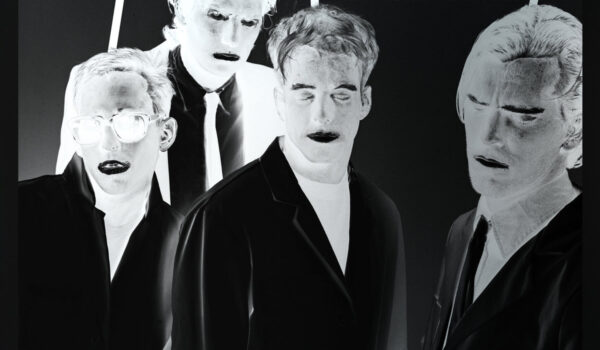
They also seem to have an inkling of self-awareness that maybe this black metal thing is kind’ve…silly, and they’ve run with it. Here’s a picture of them with weapons and armor.
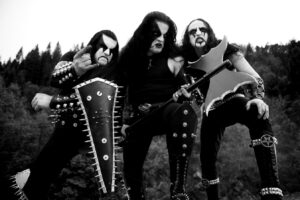
Two burned churches, because I bet they’re funny.
Comments